Every week someone slides into our DMs with the same burning question: is it caftan or kaftan? Did they buy the wrong thing? Is there a secret K-only club? Pour yourself something tall and fruity, honey. We're settling this once and for all.
Caftan and kaftan are two spellings of the exact same thing: a long, loose, flowing robe that slips over your head and floats around your body like it's got somewhere fabulous to be. Neither is wrong. Neither is fancier. It's tomato/tomahto, with more sequins.
The word traces back to the Persian khaftān and came into English through Turkish. Translating it from another alphabet left English speakers split on whether to start with a C or a K, and both stuck.
We're a C house, but we answer to both. Call it whatever you like. It'll still make you look like the most interesting person at the pool.

Caftans have been turning heads for centuries across Persia, North Africa and the Ottoman Empire, where sultans wore them in silks so rich they were basically wearable bank accounts. You can still see them today at Topkapi Palace in Istanbul. We respect a man who commits to a look.
Then came the 1960s and 70s, when the caftan became the uniform of jet-setters, free spirits and screen goddesses. (We gushed about that era in Caftans, the Symbol of Old Hollywood Glamour.) And then television gave us the patron saint of the flowing frock herself, Helen Roper. Come and knock on our door, indeed.

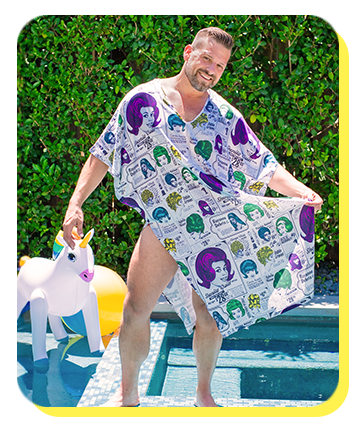
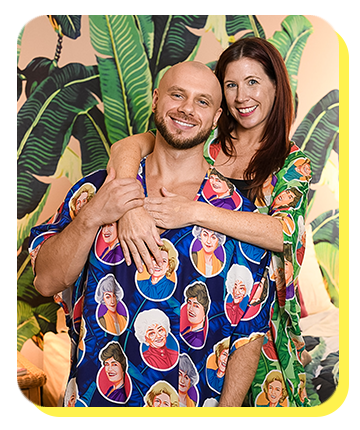
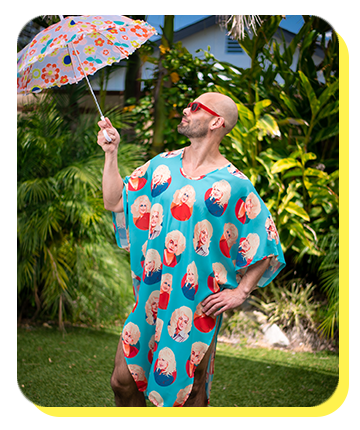
Ours tick every box: heavenly smooth poly chiffon (or silky poly satin on the Flamingle), one size, gender-neutral, with a tapered design and high side slits so you can still reach your pockets or show off a little leg.
While we're clearing things up:
C or K, it doesn't matter. What matters is that you're wearing one. Find yours in our outrageous, affordable caftans for men and women, all designed and printed by our small team in Los Angeles.
StudleyDudes and StudleyDames, are you ready for your closeup?